
I'm Paw Markus, and everyone judges. The trick is judging the right things for the right reasons.
Here are 137 answers that show you have standards without making you sound like someone who spends their time nitpicking everyone's life choices. Want to show reasonable standards? Get AI Dating Photos and attract people who share your values.
Here's how to have standards without sounding like an asshole.
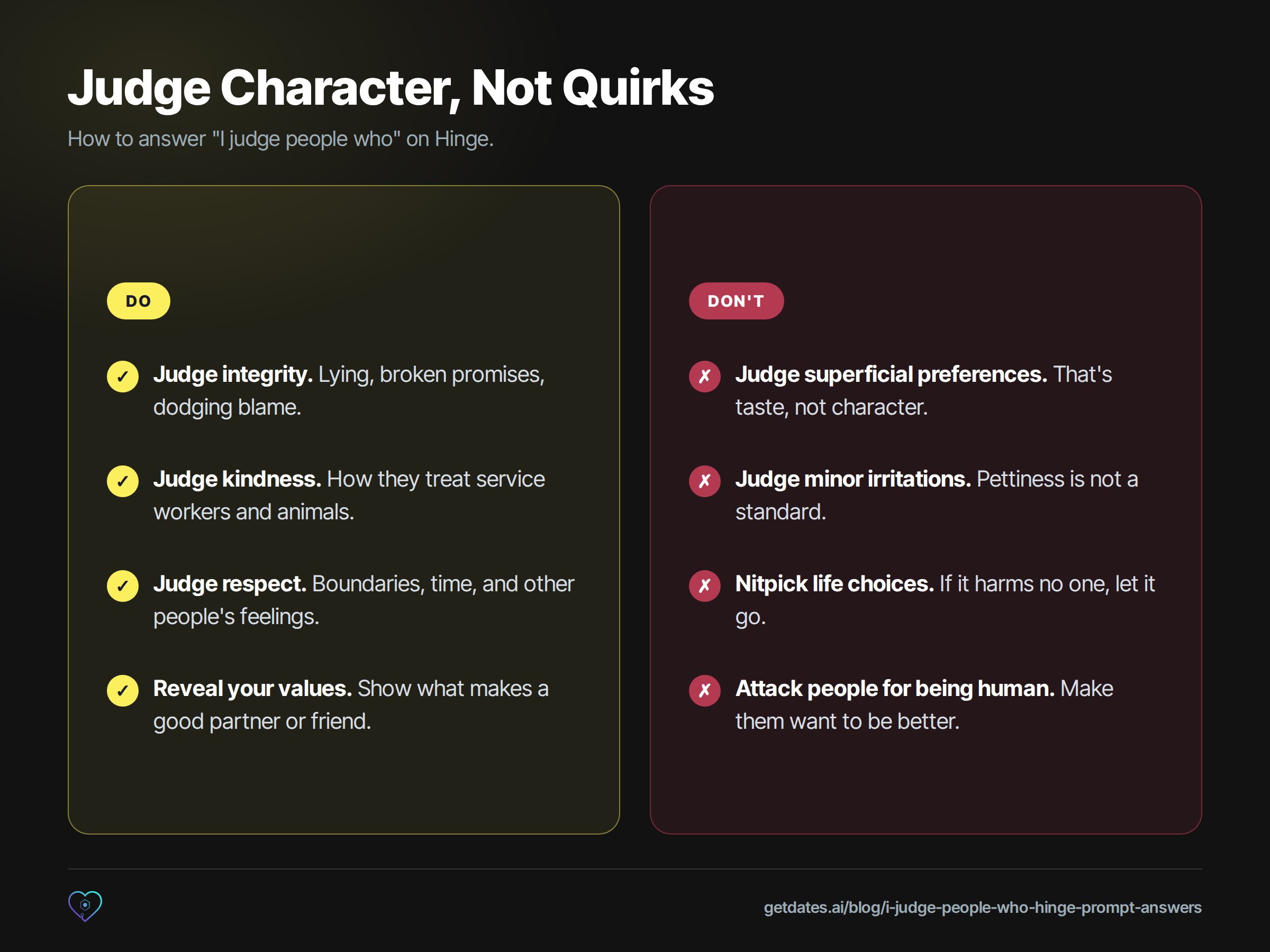
How to Answer "I Judge People Who"
Copy These Reasonable Judgment Answers
- treat service workers, retail employees, or restaurant staff with disrespect
- consistently make promises they don't keep without acknowledgment or apology
- are cruel to animals or show no empathy for creatures who can't defend themselves
- refuse to admit when they're wrong even when presented with clear evidence
- consistently interrupt others and never seem to actually listen to what people say
- make everything about themselves and can't celebrate other people's successes
- are dishonest about small things that don't even matter
- consistently show up late without apology or consideration for other people's time
- refuse to take responsibility for their actions and always blame external circumstances
- gossip maliciously and share personal information that wasn't meant to be shared
- are consistently negative and complain without ever trying to improve situations
- show no curiosity about other people's experiences, thoughts, or perspectives
- are willfully ignorant and refuse to learn when presented with new information
- consistently prioritize their convenience over other people's wellbeing
- make important decisions that affect others without including them in the conversation
- are emotionally unavailable but demand emotional support from others
- consistently take credit for other people's work, ideas, or contributions
- show no gratitude or appreciation for things that others do for them
- are manipulative and use guilt, fear, or obligation to control people's behavior
- consistently break confidences and can't be trusted with sensitive information
- are judgmental about things that don't affect them or harm anyone else
- show no empathy for people going through difficult times or challenges
- consistently choose convenience over integrity when making moral decisions
- are unreliable in emergencies or when people really need support
- make fun of others for trying new things or pursuing their interests
- consistently put their own comfort above doing the right thing
- show no respect for other people's boundaries after they've been clearly communicated
- are passive-aggressive instead of addressing problems directly and honestly
- consistently take more than they give in relationships without awareness
- show no interest in personal growth or becoming better versions of themselves
- are cruel or dismissive toward people who are different from them
- consistently make decisions based on fear rather than values or principles
- show no appreciation for the effort others put into maintaining relationships
- are unwilling to compromise or find middle ground in disagreements
- consistently prioritize being right over being kind or maintaining relationships
- show no respect for shared spaces, resources, or community property
- are selfish with their time, energy, or resources without good reason
- consistently avoid accountability and never apologize sincerely for their mistakes
- show no interest in understanding perspectives different from their own
- are consistently unreliable and make commitments they don't intend to keep
Character and Integrity Issues
Copy These Character-Based Judgment Answers
- lie about small, inconsequential things for no apparent reason
- consistently choose what's easy over what's right when faced with moral decisions
- show no loyalty to people who have been there for them during difficult times
- are hypocritical and hold others to standards they don't apply to themselves
- consistently avoid difficult conversations and let problems fester instead
- show no respect for people's time, energy, or emotional availability
- are entitled and expect special treatment without earning it or reciprocating
- consistently blame others for problems they created or contributed to
- show no interest in resolving conflicts and prefer to hold grudges
- are vindictive and seek revenge instead of working toward understanding
- consistently break their word and make excuses instead of honoring commitments
- show no consideration for how their actions affect other people's wellbeing
- are two-faced and say different things to different people about the same situation
- consistently prioritize appearance over substance in their relationships and choices
- show no respect for other people's values, beliefs, or life choices
- are opportunistic and only maintain relationships when they need something
- consistently take shortcuts that compromise quality or integrity
- show no appreciation for the sacrifices others make for them
- are dismissive of other people's feelings, concerns, or experiences
- consistently choose comfort over growth when faced with challenges
- show no interest in being fair or equitable in their dealings with others
- are petty and hold onto minor grievances instead of letting things go
- consistently avoid taking risks that could lead to personal growth
- show no respect for boundaries and think rules don't apply to them
- are inconsistent in their values and change them based on convenience
- consistently take the easy way out instead of doing what's necessary
- show no empathy for people who make mistakes or are struggling
- are competitive in unhealthy ways that prioritize winning over relationships
- consistently avoid responsibility and let others clean up their messes
- show no interest in contributing to communities or causes beyond themselves
- are inflexible and refuse to adapt when circumstances change
- consistently prioritize short-term pleasure over long-term consequences
- show no respect for other people's expertise or experience
- are wasteful with resources and show no consideration for environmental impact
- consistently choose conflict over compromise in disagreements
- show no interest in learning from their mistakes or bad experiences
- are superficial and judge others based on appearance or status
- consistently avoid commitments and want all the benefits without responsibilities
- show no appreciation for beauty, art, nature, or things that inspire others
- are close-minded and refuse to consider that they might be wrong about something
Social and Relationship Red Flags
Copy These Relationship-Focused Judgment Answers
- consistently expect others to manage their emotions and reactions for them
- show no interest in their partner's friends, family, or important relationships
- are possessive and try to control who their partners spend time with
- consistently communicate through criticism, sarcasm, or put-downs
- show no respect for their partner's independence, goals, or personal growth
- are financially irresponsible in ways that affect others without discussion
- consistently prioritize their social media presence over real-world relationships
- show no interest in resolving relationship problems and prefer to avoid them
- are emotionally manipulative and use guilt or fear to get what they want
- consistently violate privacy by reading messages, emails, or personal information
- show no respect for their partner's need for alone time or space
- are unwilling to discuss important topics like future plans, values, or finances
- consistently make their partner feel guilty for having needs or expressing them
- show no interest in their partner's hobbies, passions, or interests
- are unable to handle disagreement without making it personal or hurtful
- consistently prioritize their family's opinions over their partner's feelings
- show no willingness to compromise on things that matter to both people
- are unreliable during their partner's difficult times or important moments
- consistently expect their partner to sacrifice their goals for the relationship
- show no interest in growing together or supporting each other's development
- are secretive about their activities, whereabouts, or social interactions
- consistently dismiss their partner's concerns or feelings as overreactions
- show no respect for relationship boundaries that have been clearly established
- are unwilling to seek help or counseling when the relationship is struggling
- consistently make unilateral decisions about things that affect both partners
- show no appreciation for the effort their partner puts into the relationship
- are competitive with their partner instead of being supportive teammates
- consistently bring up past mistakes instead of working toward resolution
- show no interest in creating shared experiences or building memories together
- are unable to express love or affection in ways their partner can understand
- consistently make their partner feel like they're walking on eggshells
- show no respect for their partner's relationship with their family or friends
- are unwilling to discuss problems until they become major relationship threats
- consistently expect their partner to read their mind instead of communicating clearly
- show no interest in maintaining romance, intimacy, or connection over time
- are defensive about everything and can't receive feedback without becoming upset
- consistently prioritize work, hobbies, or friends over quality time together
- show no willingness to adapt their communication style to what works for their partner
- are unable to apologize sincerely when they've hurt their partner's feelings
- consistently make their partner feel unheard, unseen, or unimportant
- show no respect for the time and energy their partner invests in the relationship
- are unwilling to work on personal issues that negatively impact the partnership
- consistently expect their partner to handle all the emotional labor in the relationship
- show no interest in learning about healthy relationship dynamics and communication
- are unable to celebrate their partner's successes without feeling threatened
- consistently choose to avoid conflict rather than work through problems together
- show no willingness to create boundaries with people who don't respect the relationship
- are unable to balance couple time with individual friendships and interests
- consistently make their partner feel like they're not good enough as they are
- show no respect for their partner's past experiences and how they've shaped them
- are unwilling to discuss what they both want the relationship to look like
- consistently expect their partner to change fundamental aspects of their personality
- show no interest in building a life together that works for both people
- are unable to handle their partner's other relationships without jealousy or resentment
- consistently make decisions about the relationship based on fear rather than love
- show no willingness to invest the time and effort that healthy relationships require
- are unable to see their partner as a whole person beyond what they provide in the relationship
Judgment Should Reveal Values, Not Pettiness
The best judgment answers show you care about character traits that actually matter for relationships and society. They should reveal your values about how people should treat each other, not superficial preferences or minor irritations. Your standards should be about integrity, kindness, and respect, things that indicate whether someone would be a good partner or friend. If you'd rather lead with what you like than what you don't, "Green flags I look out for" shows the same values from the positive side.
Your judgments should make people want to be better, not feel attacked for being human. Save the hard no's for "My dating dealbreaker", where bluntness is the point.
Ready to attract people who share your values? Our Premium AI Dating Photos will help you present your reasonable standards and strong character in the most attractive and balanced way possible.