
We all have regrets. The question is which ones you're comfortable sharing.
148 do-overs that show growth without oversharing. Upgrade your entire profile with AI Dating Photos.
How to Answer "I Wish I Could Redo"
Copy These Thoughtful Redo Answers
- that conversation where I talked instead of listening when someone really needed to be heard
- my approach to learning languages so I'd actually be conversational instead of just knowing tourist phrases
- the way I handled that disagreement with my best friend because pride got in the way of resolution
- my first job interview so I'd ask better questions about the company culture
- that trip where I over-planned everything and missed out on spontaneous discoveries
- my relationship with exercise so I'd find activities I actually enjoyed instead of forcing gym routines
- the way I responded to constructive criticism in my early twenties when I was too defensive
- that moment when someone was clearly interested and I completely missed the signs
- my approach to networking so I'd focus on genuine connections instead of transactional relationships
- the way I handled stress during college by procrastinating instead of developing better systems
- that conversation where I gave advice when the person just needed someone to vent to
- my financial habits in my early twenties so I'd understand investing and saving sooner
- the way I approached dating in my teens by trying to be who I thought people wanted
- that presentation where I rushed through it instead of taking time to connect with the audience
- my reaction to failure so I'd see it as learning instead of proof I wasn't good enough
- the way I handled that group project by taking on too much instead of delegating effectively
- that argument where I focused on being right instead of understanding the other person's perspective
- my approach to asking for help because I thought independence meant doing everything alone
- the way I responded to compliments by deflecting instead of accepting them gracefully
- that opportunity I didn't take because I was worried about what other people would think
- my communication style in my first relationship so I'd express needs clearly instead of hoping they'd guess
- the way I handled disappointment by withdrawing instead of processing emotions healthily
- that moment when I chose comfort over growth because change felt too overwhelming
- my approach to conflict by avoiding it until problems became too big to ignore
- the way I treated my mental health like it was less important than my physical health
- that decision where I chose what looked good on paper instead of what felt right
- my reaction to success so I'd enjoy achievements instead of immediately moving to the next goal
- the way I handled jealousy in relationships by making it the other person's problem
- that conversation where I shared someone's personal information without permission
- my approach to time management so I'd prioritize relationships alongside career advancement
- the way I responded to criticism about my appearance by becoming overly self-conscious
- that moment when I chose to judge instead of trying to understand a different perspective
- my reaction to unexpected changes by panicking instead of adapting calmly
- the way I handled competition by viewing others as threats instead of inspiration
- that decision to stay in my comfort zone when growth required taking reasonable risks
- my approach to friendships so I'd invest more time in maintaining meaningful connections
- the way I handled being wrong by getting defensive instead of learning from mistakes
- that conversation where I interrupted instead of waiting for someone to finish their thought
- my reaction to uncertainty by trying to control everything instead of accepting what I couldn't
- the way I approached learning new skills by expecting perfection instead of embracing beginner status
Growth Experiences and Learning Opportunities
Copy These Growth-Focused Redo Answers
- my approach to creativity so I'd focus on expression instead of comparing myself to others
- the way I handled rejection by taking it personally instead of seeing it as incompatibility
- that moment when I chose to gossip instead of redirecting negative conversations
- my reaction to other people's success by feeling threatened instead of inspired
- the way I approached goal-setting by focusing on outcomes instead of systems and processes
- that decision to avoid difficult conversations because they made me uncomfortable
- my response to feedback by focusing on defending myself instead of finding the valuable parts
- the way I handled work-life balance by sacrificing relationships for career advancement
- that moment when I chose to judge someone's choices instead of supporting their journey
- my approach to self-care by treating it as selfish instead of necessary for helping others
- the way I responded to unexpected obstacles by giving up instead of finding alternative paths
- that conversation where I made assumptions instead of asking clarifying questions
- my reaction to being misunderstood by getting frustrated instead of improving my communication
- the way I handled peer pressure by going along instead of standing by my values
- that decision to prioritize being liked over being authentic in social situations
- my approach to problem-solving by trying to fix everything myself instead of collaborating
- the way I responded to compliments about my work by minimizing my contributions
- that moment when I chose comfort over adventure because uncertainty made me anxious
- my reaction to constructive criticism by focusing on the delivery instead of the message
- the way I handled disappointment by blaming external circumstances instead of adapting
- that decision to avoid expressing my needs because I was afraid of being burden
- my approach to learning from others by thinking I already knew enough
- the way I responded to conflict by trying to please everyone instead of addressing the issue
- that moment when I chose to stay quiet instead of speaking up for what was right
- my reaction to change by resisting instead of looking for opportunities within it
- the way I handled success by becoming complacent instead of continuing to grow
- that conversation where I focused on winning instead of understanding and connection
- my approach to vulnerability by seeing it as weakness instead of courage
- the way I responded to someone's trust by not taking the responsibility seriously enough
- that decision to avoid taking leadership roles because I was afraid of making mistakes
- my reaction to uncertainty by making decisions based on fear instead of values
- the way I handled jealousy by comparing my behind-the-scenes to others' highlight reels
- that moment when I chose to hold grudges instead of working toward forgiveness
- my approach to receiving help by feeling guilty instead of gracefully accepting support
- the way I responded to failure by questioning my abilities instead of adjusting my approach
- that decision to avoid new experiences because they required stepping outside my comfort zone
- my reaction to criticism by focusing on the critic instead of the content of their feedback
- the way I handled disagreement by making it personal instead of focusing on the issue
- that moment when I chose perfectionism over progress because I was afraid of judgment
- my approach to relationships by trying to change people instead of accepting them as they are
Self-Awareness and Personal Development
Copy These Self-Aware Redo Answers
- my reaction to stress by isolating instead of reaching out for support when I needed it
- the way I approached apologizing by focusing on explaining instead of taking responsibility
- that decision to avoid difficult emotions by staying constantly busy instead of processing them
- my response to being overwhelmed by trying to control everything instead of prioritizing what mattered
- the way I handled comparison by focusing on what others had instead of appreciating my journey
- that moment when I chose to be reactive instead of taking time to respond thoughtfully
- my approach to boundaries by feeling guilty when I needed to say no to requests
- the way I responded to uncertainty by making hasty decisions instead of gathering information
- that conversation where I assumed negative intent instead of giving the benefit of the doubt
- my reaction to unexpected challenges by seeing them as obstacles instead of growth opportunities
- the way I handled receiving gifts by feeling obligated to reciprocate immediately
- that decision to avoid asking for what I needed because I thought it showed weakness
- my approach to conflict resolution by focusing on being right instead of finding solutions
- the way I responded to change by mourning what was lost instead of embracing what was possible
- that moment when I chose to complain instead of taking action to improve the situation
- my reaction to others' emotions by trying to fix them instead of just being present
- the way I handled success by attributing it entirely to luck instead of acknowledging my contribution
- that decision to avoid taking risks because the potential for failure felt too scary
- my approach to learning new things by expecting immediate mastery instead of enjoying the process
- the way I responded to feedback by becoming defensive instead of curious about different perspectives
- that moment when I chose to hold back my authentic self because I was worried about acceptance
- my reaction to disappointment by withdrawing from people instead of processing emotions with support
- the way I handled work pressure by sacrificing sleep and health instead of setting better boundaries
- that decision to avoid uncomfortable topics because they made conversations more difficult
- my approach to goal achievement by focusing solely on outcomes instead of celebrating progress
- the way I responded to mistakes by being harder on myself than I would be on anyone else
- that moment when I chose to stay in situations that weren't serving me because change felt overwhelming
- my reaction to criticism by taking it as a personal attack instead of considering its validity
- the way I handled jealousy by comparing my struggles to others' achievements instead of focusing on growth
- that decision to prioritize productivity over presence in my relationships with loved ones
- my approach to self-improvement by trying to change everything at once instead of taking gradual steps
- the way I responded to unexpected opportunities by overthinking instead of trusting my instincts
- that moment when I chose to people-please instead of expressing my genuine thoughts and feelings
- my reaction to setbacks by questioning my worth instead of adjusting my strategy
- the way I handled receiving compliments by deflecting instead of accepting them with gratitude
- that decision to avoid vulnerability because being open felt too risky emotionally
- my approach to time management by saying yes to everything instead of prioritizing what mattered most
- the way I responded to disagreement by taking it personally instead of seeing it as different perspectives
- that moment when I chose to judge others' choices instead of focusing on my own growth
- my reaction to uncertainty by creating worst-case scenarios instead of staying present
- the way I handled competition by viewing it as zero-sum instead of seeing opportunities for collaboration
- that decision to avoid difficult conversations because they required emotional energy I didn't want to spend
- my approach to receiving help by feeling like a burden instead of recognizing the gift of community
- the way I responded to change by focusing on what I was losing instead of what I might gain
- that moment when I chose to remain in my comfort zone instead of pursuing growth that scared me
- my reaction to failure by seeing it as evidence of inadequacy instead of information for improvement
- the way I handled stress by trying to muscle through instead of seeking support and resources
- that decision to avoid expressing needs because I thought independence meant not needing anything from anyone
- my approach to conflict by avoiding it completely instead of addressing issues when they were small
- the way I responded to success by immediately moving to the next challenge instead of savoring achievements
- that moment when I chose to make decisions based on fear instead of aligning with my values
- my reaction to being misunderstood by getting frustrated instead of clarifying my communication
- the way I handled disappointment by blaming circumstances instead of accepting what I could and couldn't control
- that decision to stay quiet when I disagreed because maintaining peace felt more important than expressing truth
- my approach to personal growth by expecting linear progress instead of accepting that development involves setbacks
- the way I responded to others' achievements by diminishing them instead of celebrating their success
- that moment when I chose to focus on problems instead of appreciating what was going well
- my reaction to unexpected changes by panicking instead of adapting with curiosity about new possibilities
- the way I handled receiving feedback by defending my intentions instead of understanding the impact
- that decision to avoid taking leadership because I was afraid of making mistakes that would affect others
- my approach to relationships by trying to be perfect instead of being authentic and vulnerable
- the way I responded to challenges by viewing them as threats instead of opportunities to develop resilience
- that moment when I chose to hold onto resentment instead of working through the process of forgiveness
- my reaction to uncertainty by trying to predict and control outcomes instead of accepting the unknown
- the way I handled success by downplaying my achievements instead of acknowledging the work I put in
- that decision to avoid difficult emotions by staying constantly distracted instead of processing feelings
- my approach to asking for help by waiting until I was desperate instead of seeking support proactively
- the way I responded to conflict by making it about winning instead of understanding and resolution
Regrets Should Show Growth, Not Dwelling
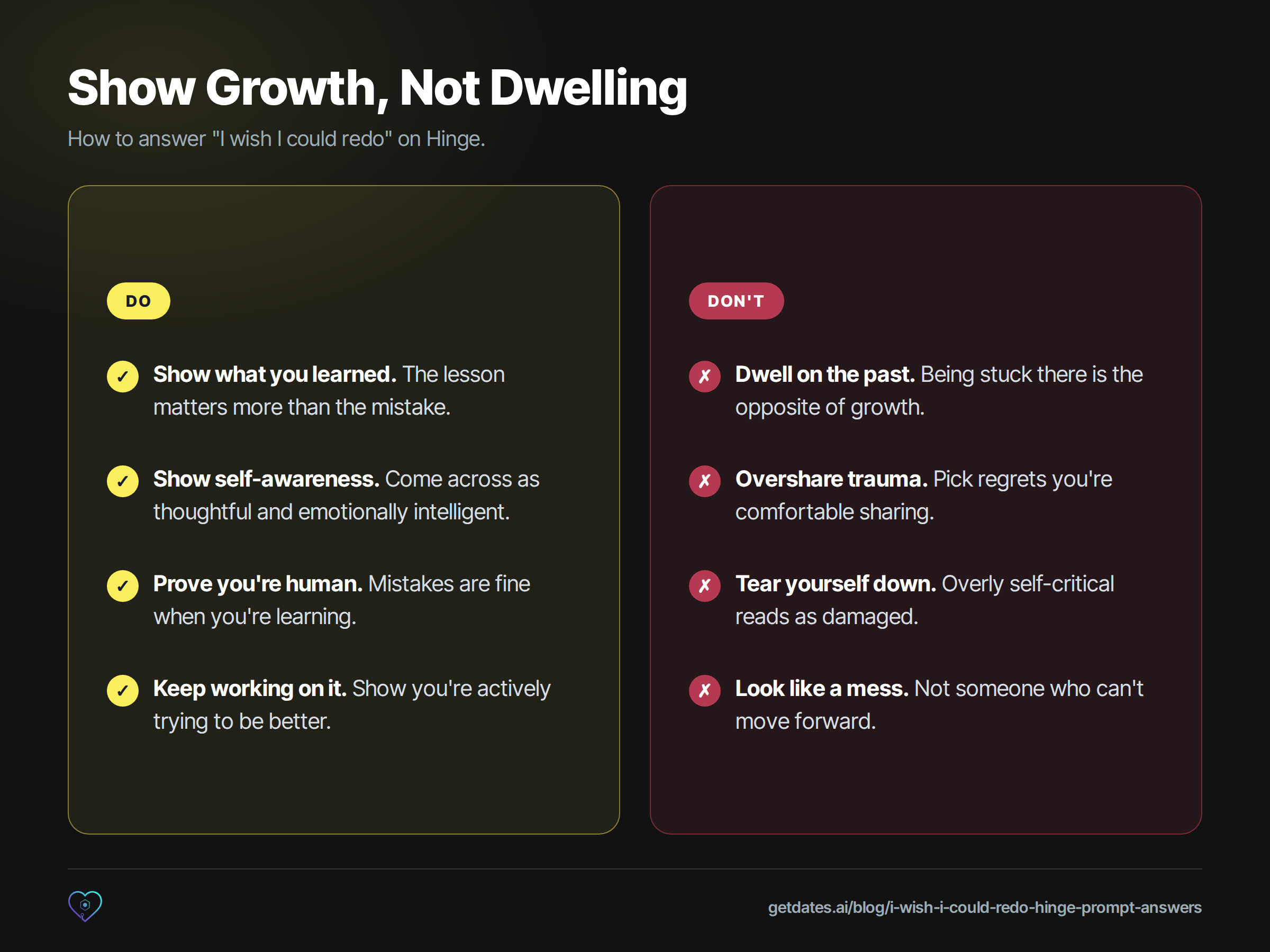
The best "I wish I could redo" answers show that you've learned from experiences without being stuck in the past or oversharing personal trauma. Your regrets should demonstrate self-awareness, growth, and that you're actively working to be better. They should make people see you as thoughtful and emotionally intelligent, not damaged or overly critical of yourself. If you'd rather talk about the work in progress than the old mistake, "I'm working on" is the forward-looking version of this prompt.
Your mistakes should prove you're human and learning, not that you're a mess who can't move forward. Same rule applies to "my least attractive quality": own the flaw, skip the self-flagellation.
Ready to show attractive personal growth? Our Premium AI Dating Photos will help you present your journey of self-improvement and emotional maturity in the most compelling and relatable way possible.