
The things you believe everyone should do reveal your worldview. Choose wisely.
131 universal recommendations that make you sound wise, not preachy. Look the part with AI Dating Photos.
How to Answer "I'm Convinced Everyone Should"

Copy These Thoughtful Conviction Answers
- learn to sit with discomfort instead of immediately trying to fix or escape it
- spend time alone regularly to understand the difference between being alone and being lonely
- practice saying thank you instead of sorry when someone gives them a compliment
- learn to ask for what they need instead of hoping other people will guess
- develop the ability to change their mind when presented with better information
- practice setting boundaries without feeling guilty about disappointing others
- learn to listen with the goal of understanding, not with the goal of responding
- spend time in nature regularly, even if it's just sitting under a tree
- practice being curious about people who disagree with them instead of defensive
- learn to recognize the difference between being helpful and being controlling
- develop the skill of sitting in silence with another person without feeling awkward
- practice expressing gratitude for specific things people do, not just general appreciation
- learn to apologize for their actions without making excuses or justifying behavior
- spend time with people who are different ages, backgrounds, and perspectives
- practice saying no without elaborate explanations or fictional excuses
- learn to recognize when they're projecting their issues onto other people
- develop the ability to be wrong gracefully and learn from the experience
- practice being present during conversations instead of planning what to say next
- learn to distinguish between helping someone and enabling someone
- spend time learning a skill that has no practical application but brings joy
- practice expressing their needs clearly instead of hinting and hoping
- learn to recognize when they need help and actually ask for it
- develop the ability to celebrate others' success without comparing it to their own
- practice forgiveness as a gift to themselves, not a favor to others
- learn to trust their instincts about people and situations
- spend time regularly doing something creative without worrying about being good at it
- practice accepting compliments without deflecting or minimizing them
- learn to recognize the difference between being kind and being a pushover
- develop the skill of having difficult conversations with compassion
- practice being vulnerable with safe people instead of hiding behind perfectionism
- learn to recognize when they're trying to control outcomes they can't control
- spend time learning about perspectives and experiences different from their own
- practice self-compassion when they make mistakes instead of self-attack
- learn to recognize when advice is requested versus when someone just needs to be heard
- develop the ability to sit with other people's emotions without trying to fix them
- practice expressing appreciation for ordinary moments and everyday kindnesses
- learn to recognize when they're avoiding something important out of fear
- spend time regularly reflecting on what they're grateful for without making it performative
- practice being honest about their limitations instead of pretending to be capable of everything
- learn to recognize the difference between being supportive and being invasive
- develop the skill of disagreeing without making it personal or attacking character
More Practical and Experience-Based Wisdom
Copy These Practical Life Wisdom Answers
- learn basic financial literacy, not to get rich but to avoid being exploited
- practice cooking simple meals from scratch to understand what nourishment actually feels like
- learn to maintain their belongings instead of constantly replacing things
- spend time learning how their own mind works and what affects their mood
- practice having conversations with service workers as human beings, not just functionaries
- learn to recognize manipulation and emotional abuse, even when it's subtle
- develop the skill of researching before forming strong opinions about complex topics
- practice paying attention to their body's signals about rest, hunger, and stress
- learn to distinguish between confidence and arrogance in themselves and others
- spend time understanding their own biases and how they affect their perceptions
- practice being reliable in small things to build trust for bigger things
- learn to recognize when they're making decisions based on fear versus values
- develop the ability to enjoy things without needing to share them on social media
- practice being curious about their emotional reactions instead of just acting on them
- learn to recognize when they're people-pleasing instead of being genuinely helpful
- spend time learning about the history and context behind current events
- practice expressing disagreement without attacking the person they disagree with
- learn to recognize when they need solitude versus when they need connection
- develop the skill of making decisions that align with their values, not their impulses
- practice being patient with their own learning process instead of expecting immediate mastery
- learn to recognize when they're trying to prove something versus when they're trying to improve something
- spend time understanding what brings them genuine joy versus what brings temporary pleasure
- practice accepting help from others without feeling indebted or guilty
- learn to recognize when they're avoiding responsibility by blaming external circumstances
- develop the ability to have fun without needing alcohol or other substances to relax
- practice being honest about their mistakes without minimizing or catastrophizing them
- learn to recognize when they're making assumptions about other people's motivations
- spend time in environments where they're not the expert or the center of attention
- practice expressing their values through actions, not just words and opinions
- learn to recognize when they're competing instead of collaborating
- develop the skill of making amends when they've hurt someone, without expecting forgiveness
- practice being content with good enough instead of always striving for perfection
- learn to recognize when they're avoiding difficult emotions by staying busy
- spend time learning skills that connect them to the physical world and their hands
- practice being generous with their attention and presence, not just their money
- learn to recognize when they're taking things personally that aren't about them
- develop the ability to change course when their current path isn't working
- practice being curious about their patterns instead of just repeating them unconsciously
- learn to recognize when they're trying to fix people instead of supporting them
- spend time learning about their own cultural biases and privilege
- practice being humble about what they don't know instead of pretending to have all the answers
- learn to recognize when they're seeking validation versus when they're seeking connection
- develop the skill of maintaining friendships through major life changes and differences
- practice being present during difficult emotions instead of numbing or escaping them
Even More Thoughtful and Values-Based Convictions
Copy These Deep Wisdom Conviction Answers
- learn the difference between reacting to life and responding to life thoughtfully
- practice seeing people's behavior as information about their internal state, not attacks on you
- learn to recognize when they're trying to control other people's opinions of them
- spend time understanding their own attachment styles and how they affect relationships
- practice being comfortable with not knowing the answer instead of pretending they do
- learn to recognize when they're operating from scarcity mindset versus abundance mindset
- develop the ability to hold multiple perspectives on complex issues simultaneously
- practice expressing love and appreciation while people are alive to hear it
- learn to recognize when they're avoiding growth because it requires letting go of old identities
- spend time learning about the interconnectedness of social and environmental systems
- practice being willing to be misunderstood when living according to their values
- learn to recognize when they're seeking external validation for internal worth
- develop the skill of making decisions that benefit their future self, not just their present desires
- practice being curious about their privileges and how they affect their worldview
- learn to recognize when they're operating from ego versus when they're operating from wisdom
- spend time learning skills that would be useful in emergencies or disruptions
- practice being comfortable with ambiguity instead of needing everything to be certain
- learn to recognize when they're avoiding intimacy by staying superficial in relationships
- develop the ability to see challenges as information rather than evidence of personal failure
- practice being generous with their assumptions about other people's intentions
- learn to recognize when they're trying to earn love instead of accepting that they're already worthy
- spend time understanding the difference between helping and enabling in relationships
- practice being willing to look foolish while learning something new
- learn to recognize when they're making decisions based on other people's expectations
- develop the skill of maintaining their values under social pressure
- practice being curious about their resistance to change instead of just fighting it
- learn to recognize when they're seeking happiness in external circumstances
- spend time learning about how their choices affect people they'll never meet
- practice being comfortable with being ordinary instead of needing to be special
- learn to recognize when they're avoiding difficult conversations that need to happen
- develop the ability to repair relationships after conflict instead of just avoiding conflict
- practice being willing to be wrong about things they've believed for a long time
- learn to recognize when they're using busyness to avoid dealing with emotions
- spend time learning about perspectives that challenge their existing beliefs
- practice being grateful for difficulties that have contributed to their growth
- learn to recognize when they're seeking drama or conflict as a form of stimulation
- develop the skill of creating meaning in ordinary daily activities
- practice being comfortable receiving love without feeling obligated to earn it
- learn to recognize when they're avoiding responsibility by focusing on things they can't control
- spend time learning about the historical context behind current social issues
- practice being willing to disappoint people when their boundaries require it
- learn to recognize when they're operating from fear-based thinking versus love-based thinking
- develop the ability to find beauty and meaning in imperfection and impermanence
- practice being curious about their own contradictions instead of defending their consistency
- learn to recognize when they're seeking certainty in situations that are inherently uncertain
- spend time developing skills that connect them to their community and environment
Convictions Should Come From Wisdom, Not Judgment
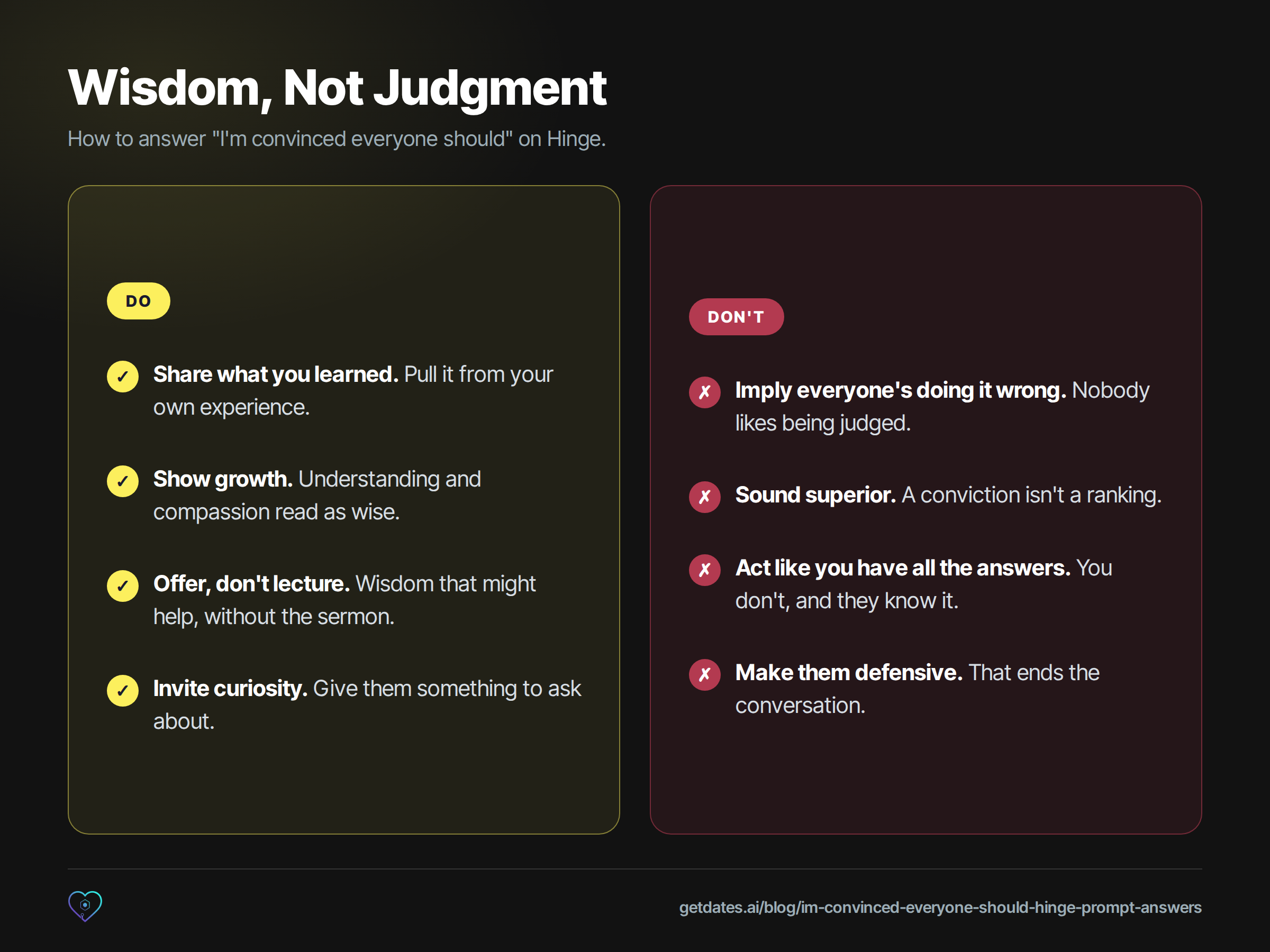
The best answers show what you've learned through your own experience without implying that everyone else is doing life wrong. Your convictions should reflect growth, understanding, and compassion, not superiority or the belief that you have all the answers. Share wisdom that might help others without being preachy about it. If your belief is more of a hot take than life advice, "I'm convinced that" is the better prompt for it.
Your convictions should invite curiosity, not defensiveness. Same rule applies to "I wish more people would": name the thing you value, skip the lecture.
Ready to share wisdom that actually helps people grow? Our Premium AI Dating Photos will help you present your thoughtful insights and genuine wisdom in the most attractive and humble way possible.